Transform Cooking from Chore to Joy: Beginner Tips

It was tempting to paraphrase the title of the movie Dr. Strangelove and call this article “How to learn to stop worrying and love cooking”.

Cooking seems to have lost its attractiveness over the years. Actually, this is a bit disappointing. There seems to be some misconceptions about cooking. Many people seem to think it is difficult or it is time consuming. They see it more than a chore than a pleasure. It can be a chore if you look at it as such, but there are ways to learn to enjoy cooking.

Personally, I enjoy cooking. I have been cooking about everyday for the past 45 years. My cooking must be good because my wife has nicknamed me “the kitchen god” and our guests always enjoy the meals I prepare. When I visit my family, they are always keen of having me preparing meals, too. But just like Rome was not built in a day, I had to go through a learning curve. And so can you!
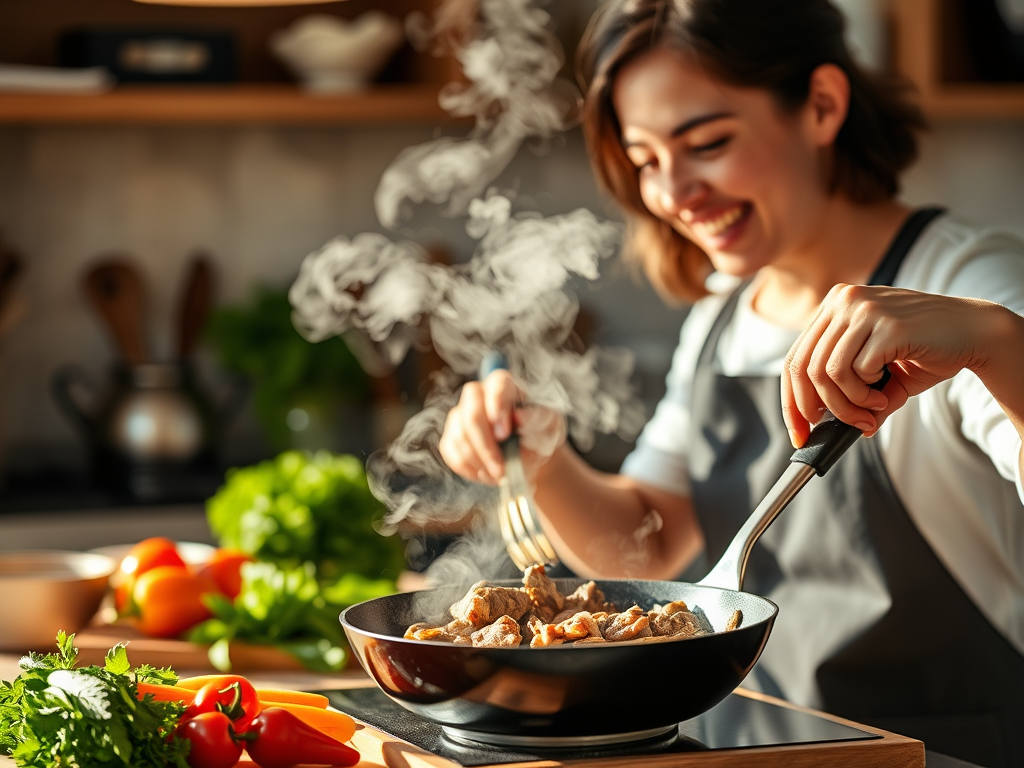
There are a few simple tips that help greatly to find some fun in cooking meals. Here are a few of the most useful.

The first thing is to not put pressure on yourself. If you do not cook, just start slowly. Just cook only one day or two a week. Take it easy and see how it goes.

My second tip would be to start with something simple. When I started to cook for myself as a high school student, I would make something really simple like ground beef and mashed potatoes or pasta with a slice of ham. These are easy dishes to make and it is difficult to mess them up. Yet, I did mess up sometimes, mostly because I did not pay proper attention, but that is something you learn to correct quite quickly. Anyway, never try to get to cooking with fancy recipes. They usually require skills that you may not have, yet. There is nothing more frustrating that ruining a meal and you should have no reason to set yourself up for failure.

Ease into it gently. A simple dish consisting of some meat in the frying pan with a side of rice, pasta or potatoes with a couple of vegetables that you boil for a few minutes are really easy to make and most people like such dishes. To make the dish nicer, there is nothing like making some sauce. Sauces should not be underestimated. they are the secret behind great cooking. Without sauce, most dishes are rather dull and sad. Make some sauce and it feels like a fancy restaurant.

With sauces, take it easy, too. You do not need to start with a hollandaise. If you prepare some meat in a pan with a bit of butter, you will get nice brown bits. Just heat the pan at the max and pour some water on the brown bits and juices. it will boil right away and just scrape the bottom of the pan with a wooden spoon and you will get a fantastic brown sauce with all the delicious flavors of your meat. Pour the sauce on the meat and your guests will be very impressed. You want to go fancier? Just add a bit of cream in that brown sauce and you will be amazed. Trust me, it is incredibly easy to make and it will wow your guests.

Earlier, I mentioned pasta. This is one of the easiest dishes to make. Just make a sauce with some crushed tomatoes and some garnish of some vegetables (personally, I like onions, celery, carrots or zucchini) or meat or whatever you like, and you will have a delicious dinner in less than half an hour.

One particular food that people seem worried about making is fish. It is understandable if you try to make fish in a frying pan. Overcooking the fish will make it dry and it probably will crumble in the pan if you are not very experienced. The solution is to buy frozen vacuum pack fish. Just put the pack in boiling water for 10 minutes max. Then, cut the plastic pack open and slide the fish on a plate. If you wish some sauce, just melt some butter in a pan with lemon juice and some parsley and, once again, it will taste like what you would get in a fancy restaurant.

Other simple dishes to make are soups and salads. In my household, my vegetable soup is a favorite. All I do is to chop somewhere between four and ten different kinds of vegetables that I put in a big 4-liter pot of salted water. Once it is all cooked, which is about 15 minutes to get to boil and about 15 minutes to cook, I grind the soup with a hand blender. You might want to skip that part, or you may choose how chunky or finely you want to grind. That is the beauty of cooking: there is no absolute rule. You prepare food the way you like it. The pot may take some time to prepare but it lasts us for about five days, so just pick a day that suits you to spend that time, and you will have delicious soup for days within a couple of minutes in the microwave. Here, too, just add a teaspoon of cream in your bowl and the basic veggie soup with turn into a fancy velouté! Salads are even easier and faster to make. Just choose all the veggies you want to put in it and other ingredients if you wish like hard-boiled eggs or canned fish. it is all up to you. The salad is ready in a few minutes and it is always nutritious. If you want to make fancy just add some herbs or bits of nuts or almonds. A simple vinaigrette (1 volume of vinegar with 2 volumes of vegetable oil and a pinch of salt) is the perfect dressing for a salad.

These are just simple examples that show that cooking does not need to be difficult or time consuming. The key is to not take on more than you can handle. If you start gently, you will gradually will want to try new dishes and be a bit more adventurous. Just allow yourself the time to gain experience. The rewards will be many.

Copyright 2025 – Christophe Pelletier – The Sensible Gourmet – The Happy Future Group Consulting Ltd.

My poetry book is published

My poetry book about food and farming is published and now available on all Amazon online stores. The easiest way to find the book is by typing Christophe Pelletier in the Amazon website search bar.

There is an English version, “Down to Earth” and a French version, “Vers de Terre”. Since my last update, the content has changed somehow. I modified some of the poems and added a few more. There now is a total of 99 of them. The cover also underwent a makeover. I have created a page on this website for the book. To find more information and details about the content, please click click here Continue reading

How to prevent food waste at home

Last week, food waste was in the news. For Canada, where I live, the average amount of wasted food by household was estimated at 79 kg per person per year. In my household, even in a bad year, it is less than ½ lb, about 99.5% less. So what do I do to get such a much lower amount?

Well first, as I indicated in an earlier article, food wasted is money wasted, and I hate wasting money. That is my motivation. Another important motivation for me is the way I have been raised and my family’s memories of food shortages during WWII. I have been taught to appreciate the value of food, regardless of its nature. Wasting food is bad, purely and simply! Anyone who saw me discovering the slightest amount of spoiled food will tell you that my facial expression is a good incentive to take one step back.

So, how to avoid food waste?

First of all it is important to have a clear idea of what you want to have for your meals during the coming week or so, depending a bit on how often you shop. Plan ahead and limit improvisation, although there is nothing wrong once in a while to change plans to treat oneself with a special request.

From the menu planning, just buy what you need. Do not buy what you do not need! That way, the food you buy will be used on a rather short notice and will have fewer chances to go bad. Buy with reason. It is indeed very tempting, and that is the purpose, to get lured by store flyers with attractive prices. Some people have a hard time resisting advertising and buy things that they forget about later, and those rot. Some others decide to freeze the food and they forget about it, and the food gets freezer-burned and ends in the garbage. There are a couple of things to think about. First, there will be flyers again next week. Do not worry; the same item will be for sale again soon. If you do not buy it right now, it will be back in a couple of weeks. There is no point of hoarding food if you do not have a clear idea of what you are going to make of it and by when.

Managing the fridge and the freezer is also quite important. The more stuff you put in there, the more difficult it is to remember it all, and the easier it is to forget about expiration dates. Make sure you work on a FIFO (first in first out) basis as much as possible. That is much easier if you organize the fridge in a way that helps you see what is in there, in particular the stuff that tends to be pushed to the back. Easy oversight and access is an advantage. There is no point in having a fridge packed full. With frozen stuff, just make sure you put the freezing date on the packaging and organize the appliance so that you can follow the FIFO principle. Also to keep the foods you freeze yourself, vacuum the food before freezing. It makes a huge difference by reducing significantly the risk of freezer burn and thus extends the life of your food for quite much longer.

Another area of waste consists of leftovers. Here there is a simple rule: leftovers are good to eat. If you have an issue with leftovers, perhaps it is time to take a good look at your values. Actually, everything that has been cooked has a much longer life than raw food. On top of that, many dishes taste actually much better the second day than the first day. Personally, I love leftovers and they have another advantage: since I cook more than I need for the first day, I can have food for two or three days without to have to cook on those days. It frees me time! And if you do not want to eat the same things for a few days on a row, most leftovers can be frozen and kept for quite some time in the freezer by following the guidelines I indicated earlier on.

When you buy, check on the best before date (BBD) indicated on the packaging. It gives you an idea of how fast or less fast you must use your food. Not all BBD are equal. For some products, the BBD is really the limit. I see that for fresh milk, for instance. For other products, you can exceed the date without problem, but do not take my word for it. You must also create your own little “database”. For instance, for the brand of yogurt that I buy, I can pass the BBD by 10 days to two weeks without any problem. That is true for that particular brand. It might not be true for all brands. You must discover that by yourself.

Beyond that, there are simple rules that apply to keep food longer. Since spoilage is caused by microorganisms, keeping food in the fridge slows down their activity and makes the life longer than if kept at room temperature. Cooking a food kills most of the microorganisms and, once cooked, the food can be kept longer in the fridge than if it is not cooked. It all depends on your cooking skills and on your creativity to make meals.

Bottom is that preventing food waste is not difficult when you apply simple rules. It is about organization and planning and a bit of understanding about food safety. The reward is that it saves you quite a lot of money.

Copyright 2021 – Christophe Pelletier – The Happy Future Group Consulting Ltd.
Hard cold Canadian butter

Perhaps you saw it in the news. There has been a lot of excitement about butter in Canada in the past few days. It made the news headlines about all around the world. The butter in Canada seems to have become harder, and harder to spread over the past year or so. The blame seems to be about the use of palm oil in cow feed. This is interesting because it brings up some matters that I had addressed in my article on fats, earlier on in this blog (in particular read the sections about margarine vs. butter and how the fatty acids profile affects the physical quality of the product). Here are a couple of links about the “buttergate” in which you can find more details.

https://www.bbc.com/news/world-us-canada-56175784

https://www.ctvnews.ca/business/dairy-farmers-lobby-asks-members-to-stop-using-palm-as-it-investigates-buttergate-1.5323703

20210228_082546

Butter or frozen cottage cheese?

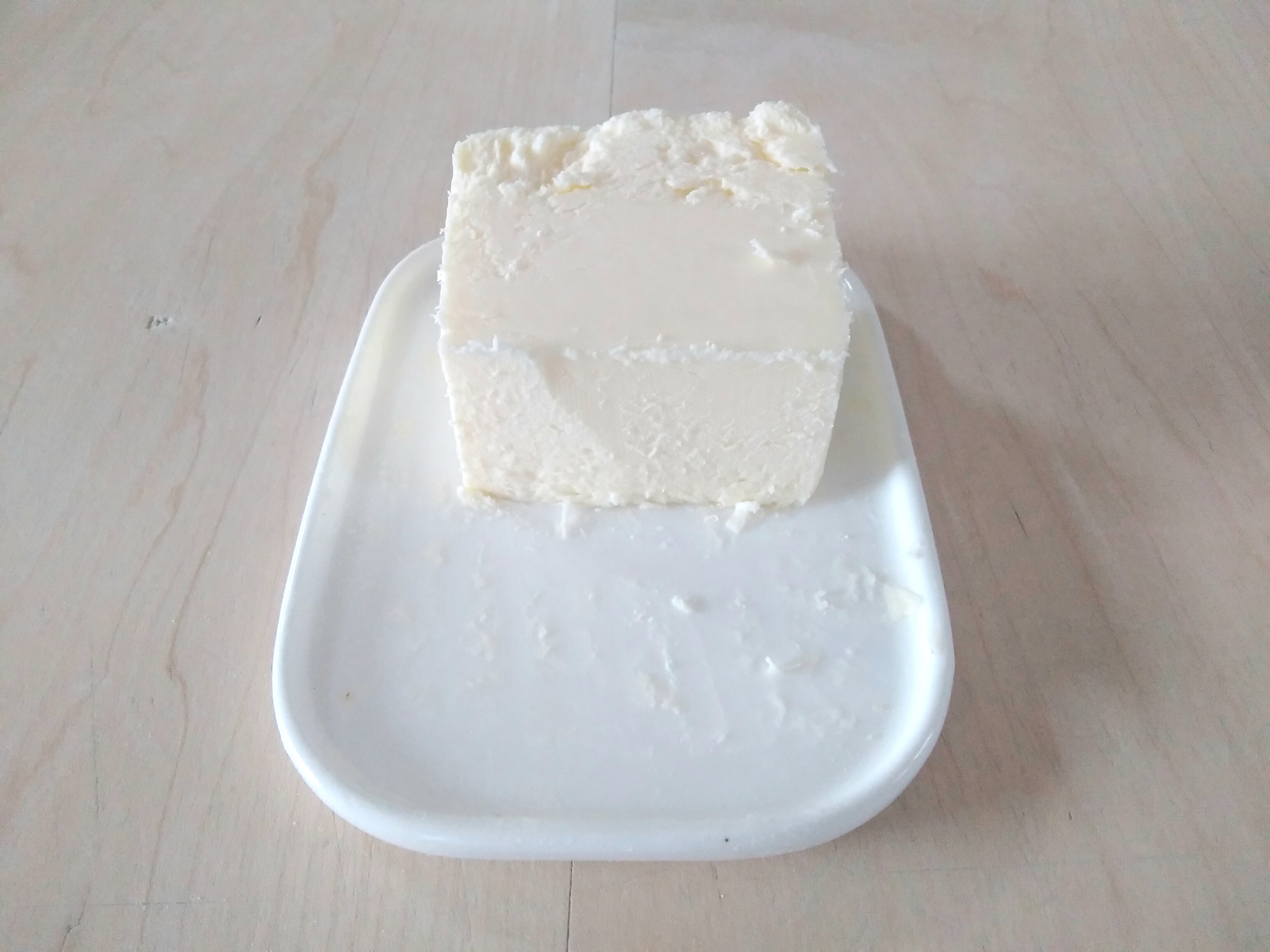
The funny thing is that I found butter to be a lot less enjoyable the first day I tried some almost when I moved in Canada 22 years ago. I do not think it was just me because right at the beginning of my stay here, I had been asked by a Canadian what I thought of the butter. He was asking me that because he had noticed that quite a few people he knew who had moved to Canada were complaining about the butter. I remember just answering something along the lines of “meh, not the best ever” and I had not paid too much attention to it after that. Yet, one of my neighbours in Vancouver had once started her own ranting about Canadian butter but she blamed the poor quality to the fact that, according to her, Canadian butter is frozen. I have never really tried to find out if it is always the case. Then, after I met the Canadian lady who is now my wife, I took her for trips to Europe about every year. Not only did she find all foods to taste much better there, she really developed an issue with Canadian butter in particular. And the issue has been –and still is- that the bloody thing is much stiffer at room temperature in Canada than the butter in my family in France even straight out of the fridge. One thing I know for sure is that in Canada there is 80% fat in butter, while in Europe it must be minimum 82%. Other thing I had noticed is how the Canadian salted butter is much more salty than in Europe. Anyway, I only buy unsalted butter. She has been adamant to go live in France since then. Food is one important reason for this move, and we are indeed making plans. The current Covid-19 pandemic has delayed this somehow but it is going to happen.

Personally, I have never been a fan of dairy in Canada. I find the butter, as mentioned, stiff and unpleasant to spread on bread. It also tends to break in a rough chunk instead of allowing me to cut all the way through when I cut a block out of the pound of butter to put on my butter dish, which makes the butter look like some frozen cottage cheese, which I always found weird and unappealing. I found Canadian cheeses tasteless and buttery. Ironic to see butter look like cheese and cheese loo like butter. Save me from blocks of cheddar or the likes of it. Actually, those would qualify more as butter to me than the butter. I cannot say anything good about Canadian attempts to make Brie or Camembert. Those have the softness and the appeal of hockey pucks. Not for me. Of course, I can find some imports, but the Canadian dairy sector has managed to get protection from the government and foreign cheese has import duties that make even the dullest Brie of Gouda about as expensive as precious metals. I seriously object paying 2 to 3 times what I consider the normal price of cheese. Along with dull quality, it is the same problem with bread, which is why I make my own, and the same why I make my own deli and grow my vegetables. So, since I am in Canada, I do not eat much cheese anymore. Milk is not any more attractive, either. I always found it somehow soapy and with a weird mouth feeling, not to mention that I really do not need to have extra vitamins in it, and even less so when it is added as a palmitate compound, which is… guess what… related to palm oil. So here it goes again. At least, something is consistent here. Perhaps, they want to feed us as much as palmitic acid as they can because palmitic acid is such a great saturated fatty acid that has this great characteristic that it tend to increase the level of LDL, so so-called bad cholesterol. Thank you Canadian dairy industry and Canadian government for the special care you give us. Ok that was sarcasm.

So, to sum up what is in my previous blog articles and in the two links I gave at the beginning of this article, palm oil is in cattle feed. It seems that the countries where this happens are Canada, the US, the UK, Australia and New Zealand, interestingly enough all Anglo-Saxon countries with a fabulous world-famous cuisine. Some gave us mad cows; others inject their cows with growth hormones. Great foods, because as they will tell you, they comply with government regulations, which we all know are pretty much developed under pressure of industry lobbies to maximize producers’ profits, but have the nation’s seal on it to give it this appearance of independence, objectivity and care for the people. The sad thing with this food system model is that in fact it is a failure. This kind of production exists only because it is subsidized to death and that all inputs to produce are also subsidized to death. If you look at what on average taxpayers pay to subsidise a system that cannot survive without help, you would realize that the price of food is not as cheap as it seems, but since it is in the form of taxes, it will not be counted in the relative percentage of the share of food in the total household budget, which industry always present as a reason why they do such a great job for society. Also not included in the price of food is all the externalities, which we could also called collateral damage costs, such as impact of health and health costs (think cardiovascular diseases, some cancers, diabetes and overweight related ailments), which happens when you cut corners on health for profit reasons.

I have spent many years in the food industry and I also know that the truth is in the middle. I have heard the criticism when I was in the system. Things are never as bad as the opponents claim and they are never as good as the industry claims. That said, deliberately transforming butter into something in the direction of margarine (the original kind which consisted of saturating fats) while the early margarine (not very good stuff by then from a fatty acid profile point of view) industry was trashing butter as unhealthy is almost surrealistic. By then, butter had actually a much more positive and healthy fatty acid profile then the early margarines and got blamed. Once the margarine industry realized that their stuff was not that great, they have done nothing else than copying the profile of the “original” butter. And now, we discover that the Canadian butter industry is doing exactly the opposite of what they should be doing from a health perspective. It is amazing how the quest for more profit impairs thinking. The industry is populated with lots of really good and bright people. The knowledge is there and has been for decades. Yet, and just for profit, it is almost all of that is put to sleep or forgotten, and it really always baffles me to see how the industry, time and time over, is giving its opponents sticks to beat them up. Although food is not as cheap as it means, but it seems deceivingly so at the price label point, I believe it would be much better for all of us if it were more expensive but made healthier and more nutritious, because I have noticed that real quality is much more satisfying and that I get more with lesser quantities.

Copyright 2021 – Christophe Pelletier – The Happy Future Group Consulting Ltd.

Update on my poetry book

I am almost finished with the book, which will have Down to Earth as its title. I am going to make a French version as well, the title of which will be Vers de Terre.

The book contains 90 poems about food and farming. As a strong believer in the benefits of using both brain hemispheres, I composed poems that range to more “classic” themes to themes dealing with new technologies in food and agriculture. There is something for everyone in these poems.

I divided the content into six sections (click here to see the table of contents):

  • Fields: poems about plants and agriculture
  • Pastorale: poems about animals and animal husbandry
  • Characters: poems about people from food and agriculture
  • Edibles: poems about food
  • Destinations: poems about countries and their foods
  • Gravitas: poems about serious subjects

I also mixed many poem formats:

  • Sonnet, because of its elegance and structure
  • Haiku, for its powerful and concise impact
  • Villanelle, because it is so musical and light
  • Limerick, just to try to be funny
  • Rondeau, for classicism
  • Cinquain,  for modernity and concision
  • Free style, to let my mind wander without the rigidity of predetermined format, which I did mostly in rhymes but sometimes without rhymes but for a feel of rhythm and visual or sensory impressions

Next to the simple pleasure of poetry, I wrote these poems in a way that can be conducive to read and discuss them with an educational function in mind.

Copyright 2020 – Christophe Pelletier – The Happy Future Group Consulting Ltd.
A few interesting things about lipids

In the course of the past few decades, fats have gotten a negative reputation. Even though reason seems to make a timid comeback, as carbohydrates have taken over the role of the bogeyman, there still is a stigma on fats. The real culprit is not fat as much as it is overconsumption beyond our actual nutritional and physiological needs of fats, of food, of calories, well… of pretty much everything in our great consumption society. I will not spend time on the overconsumption of fats, as it is mostly a case of gluttony and ignorance about nutrition. I will write the following lines to show why fats are important and contribute to make life fun.

First of all, fats do belong is a healthy balanced diet. Fats, which are part of the lipids as they are called in biology, are building blocks of cell walls of living organisms. Lipids play very important roles in our metabolism and biochemistry. They store calories, which is convenient when food is scarce, but they have many more roles. Cholesterol, a lipid with a terrible reputation, plays an essential role in the synthesis of steroid hormones, which in turn play a role in sexual hormones. Cholesterol also plays a role in the synthesis of vitamin D. Other lipids include mono-, di- and tri-glycerides and fatty acids, and their cohort of saturated, mono-unsaturated and poly-unsaturated types. We all have heard about essential fatty acids, in particular omega-3 type is quite a popular one, and about their importance for good health. Just take the time to do some research on those terms and you will see how important lipids are. It is not particularly difficult, although it can be sometimes tedious, so just take your time to browse information.

Just any other thing in life, too much is exactly that: too much. Excesses always bring problems. It is true for fats. It is also true for the popular protein group. Health and nutrition are about balance and proper amounts.

Butter or margarine?There are some interesting consequences of the fatty acid composition of edible fats. First what is meant by saturated or unsaturated relates to the presence (unsaturated) or absence (saturated) of double bonds in the molecule of a fatty acid. An unsaturated fatty acid molecule has the ability to combine with oxygen or other atoms. When a fat combines with oxygen, it becomes oxidized, which is commonly known as rancid, with the bad taste that goes with it. Saturated fats do not have bonds that can open and combine with other elements. They are more stable. And that was the whole idea of margarine as a substitute for butter. Butter, as you probably know, can get rancid, especially if it is not refrigerated. A way to avoid that is to add ß-carotene, an orange pigment and precursor of vitamin A, to the butter, which is common in the dairy industry. The purpose of margarine was to have a butter substitute that would not get rancid and to do that, the process consists of hydrogenating (adding hydrogen to) the fat. The double bonds open and attach hydrogen atoms, thus leaving no space to oxygen to attach and make the fat rancid. Basically, the original margarine was fully saturated fat. It is ironic to know that when in the same time the margarine industry did all it could to discredit butter, which is a rather complex mix of long and short fatty acids, although mostly saturated. And it is also interesting to see that over time, margarine producers actually produced vegetable fat spreads that mimic butter much more than the original margarine ever would. Since I am addressing the processing of fats, unsaturated fats can turn into two different types called Trans and Cis. We have all heard about the risks of Trans fats and they are banned about everywhere nowadays. Trans and Cis are two spatial molecular configurations of a same fatty acid molecule, depending on which side of the molecule the radical is. This tiny difference has serious implications for metabolism and health, though.

Another characteristic of fatty acids is their physical property. In particular, saturated fats are usually harder at room temperature than mono-unsaturated and even more so than poly-unsaturated, because they have a lower melting point. The more double bonds there are in the fatty acid chain, the softer, even the more liquid the fat/oil is. Also, the longer the chain, the harder the fat is, as their melting point is lower. To sum up and simplify a bit, the softer or more liquid a fat/oil is at room temperature, the healthier it probably is.

Another characteristic of fats is that the fat profile in the food will influence the profile in the body fat. This is important to understand in regard with animal farming. If farm animals eat a diet that contains more unsaturated fats, their body fat will also be more unsaturated. This means that their meat will have a more unsaturated profile, which is a rather positive thing for you as the consumer. Of course, here the rule is always the same: the diet must be balanced.

Animal products and fat is quite an interesting topic, and a rather complex one, too. Fatty meat used to be the preference (think bacon). Why? Simply because I am talking about times when people did not live in overheated houses and had physically demanding jobs. Animal fat was rich in calories, which were quite useful both to do hard work and to live in cool homes. As comfort improved and mechanization made many jobs physically less demanding, the need for these calories decreased. If they are not being burnt, they accumulate in the body. That is why a comfortable life requires fewer calories than a demanding life. Yet, different cultures, because of culinary tradition, deal differently with the fattiness of farm animals destined to produce meat. In the EU, production shifted towards leaner breeds of animals, as consumers did not want fatty meat. In North America, the approach has been a bit different. They like fatty meat but cut off the meat on the plate, or eat quite a bit of it. A disadvantage of producing fat animals is that it requires more energy for their body to produce a pound of fat than it does to produce a pound of muscle. Males (I am talking farm animals here) generally produce leaner meat than females, but castrated males tend to produce a fattier meat than females. Using hormones in animal farming has an effect, too. Since the hormones used are female hormones, animals tend to fatten more. From the producer’s perspective, it is a matter of what the market pays for what quality of meat. In the EU, leaner animals receive a better price, but it is not everywhere the same around the world. Hormones also help reduce the cost as fattening goes faster. Fast is nice, but the age of an animal influences how much fat it gets in its tissues. Just like humans, farm animals have mostly water in their body tissues when they are young. When they age, fat gradually replaces the water, and we all know that losing the love handles gets more difficult with age. It is the same thing with animals. It is complex but fun, isn’t it?

What we have on our plate is all about economics. Depending on what consumers buy, the economic differ, and so do farming systems. Depending on production systems and consumer demand, fattiness of animal products varies. Although most people will tell you that meat is protein, this is far from always true. There different grades of fattiness between regular, lean and extra lean ground meat, for instance. Fat percentages vary greatly, from 10% to 30% of total weight, to simplify. Protein will be around 20% for most meats, regardless of the species. Keep in mind the main ingredient of meat is water. Animal bodies consist of roughly 60% water. If you remove the water and take the dry matter equivalent, fat percentages on dry matter will vary between 25% and 75%, while the number for protein will be around 50%. In the end, meat may contain more fat than protein, sometimes substantially more. Meat and protein are not the same. Just imagine what happens when you deep-fry meat, then!

Does fatty meat taste better? Meat lovers will tell you that they like their meat marbled. Here are a few interesting facts. The flesh of young animals contains more water than older animals, from an intra-species point of view. Of course, there is no point in comparing chickens and cows about this. But within the species, the rule applies, and so does the feeding program. An interesting detail about taste is that aromatic molecules are soluble in fat, but they are not soluble in water. Those aromatic compounds come from the food the animals eat. Therefore a fattier animal will contain more aromatic compounds than a leaner one, all things being equal further. Of course, the kind of feed they eat also contribute greatly. An animal that eats lots of bland feed will not have much of these compounds, even if it is rather fatty. And a less fatty animal that would eat lots of aromatic feed might taste better. When it comes to the marbling, aromatic compounds are not the only thing that plays a role. Marbled meat will keep its juiciness better and will have a softer texture than a lean meat. Lean meat contains relatively more water that will evaporate to some extent during the cooking and  as water leaves the meat fibers, the meat might end up a bit stringy, especially if it is cooked through and though.

Related imageDo you see now why a Pata Negra pig’s ham tastes so good? It is a pig that is kept in semi-wilderness in Spain and feeds for several years eating chestnuts and other shrubs in a region where vegetation is sparse. It is quite different from a pig that is fed intensively and slaughtered at 6 months of age or so. The price is not the same, either.

So there you have it, fat is good but you must make sure it is good fat and that you eat with moderation. In the end what you have on your plate is a compromise between many contradictory requirements such as taste, quality, cost and price.

Copyright 2020 – Christophe Pelletier – The Happy Future Group Consulting Ltd.

Carbohydrates are diverse

Carbohydrates have been under scrutiny for a while, in particular since the Atkins diet became popular. Are carbohydrates bad? If the answer is simple in popular media, the reality is, as usual, a bit more complex.

First of all, it is important to realize that carbohydrates are not a homogeneous group of nutrients. They can be divided in three categories: fast carbs, slow carbs and fibre.

Fast carbs are called that way because they pass into the blood stream quickly after being ingested, and provide 4 calories per gram. They are small molecules. They are commonly known as sugars and the most common ones are glucose, fructose (a typical carb from fruit as the name indicates) and sucrose (the powder sugar you find in stores). Sucrose is a combination of one molecule of glucose with one molecule of fructose. The purpose of fast carbs in the body is to provide energy quickly, in particular to provide the brain with glucose, as it is the only fuel the brain can use to function. For as much as they are very useful for a quick energy boost, they will be metabolised and stored as body fat if the body cannot burn the quantity sent in the blood stream. This latter characteristic is important to understand from a nutritional point of view. Do not eat more sugar than you can burn in the short term because it will go to your hips. They are useful during intense exercise. Professional cyclists often use glucose from their bottle. Here is a little calculation to show how it works:

Since fast carbs should be 40% of total carbs maximum and carbs should be 60% max of total calories, the maximum amount of calories you can have from fast carbs is 40% x 60% = 24% of total calories. For a person who needs 2,000 calories per day, the maximum of fast carbs would be 24% x 2,000 = 480 calories. Apples and oranges are about 50 calories per 100g, carrots about 40 and bananas above 80. Let’s say you have 500 g of fruits and veggies per day. This would roughly amount to 5 x 50 = 250 calories. As you can see, with a few fruits and vegetables you get all the fast carbs that you need. Remember, 40% of 60% is the maximum. It is better to get fewer calories than this from fast carbs. But if you want a juice or a soft drink, how much could you have? If the total calories from fast carbs is 480 and you got already 250 from fruits and vegetables, there is room for only 480 – 250 = 230 calories. Since 1 gram of carb provides 4 calories, that would a maximum of 230/4 = 57.5 grams of fast carb per day. If you take a drink at 10% sugar, the maximum quantity of liquid is then 57.5/10% = 0.575 litre. If the drink contains 15% sugar, the number becomes 57.5/15% = 0.383 litre.

Slow carbs are quite different. The typical slow carb is starch, which can be found in grains (wheat, corn, barley, rice, etc…), pasta, potatoes and many legumes (beans, peas, lentils, etc…). They do not pass into the blood stream right away. Starch is a long chain that consists of glucose molecules. During digestion, and with intervention with insulin, starch is metabolized into a shorter chain, called glycogen, which is stored in the liver. As its name indicates glycogen is a word that means glucose-forming substance. Depending on the sugar level in the blood (aka glycaemia), the glycogen in released “on demand” with help of insulin to provide the organism with the needed glucose but just in the right quantity at the right time. This has two advantages. One is that glucose is not provided in one shot, as it would be metabolised and stored as body fat. Glucose is released just to be burnt. It is almost comparable with a high-efficiency furnace. The other one is that through this system, the carbs eaten during the meal will provide energy for a couple of hours at least, depending on the level of physical activity. Then, it is not a surprise that hunger happens around 11:00 am so about 3-4 hours after a breakfast with an appropriate amount of slow carbs. There is no need for snacking between meals if the meals are proper. Slow carbs also provide 4 calories per gram.

A small word is useful about gluten. The word starts with “glu” and is a normal component of grains, but on the contrary to what many people seem to think, gluten is not a carbohydrate. It is a protein. Gluten gives bread its network structure.

Fibres have a rather different function. The main form of fibre is cellulose, which is also a long chain of glucose molecules, but arranged differently than in starch. Cellulose is not providing energy as such, as it cannot be metabolised in the body. Fibres play the role of ballast. They help dilute the calorie density of foods (think of fruit and vegetables) and they probably also play a role in the clearing of the intestine during transit. Fibres may also play a role in reducing the risk of colon cancer.

As you can see, carbohydrates are useful, but they must be part of a balanced diet. Because of their characteristics, one should not splurge on fast carbs, because the excess quantity will be metabolised into body fat. A good guideline is to have no more than 60% of the total calories of the diet from carbs, fast and slow combined. The percentage of calories coming from fast carbs should be less than 40% of the total carbs calories, and less is even better. If you eat fruit regularly, you probably will have enough fast carb. It is better not to add sugar in tea, coffee or yoghurt to name a few, even though sweet tastes nicer for many people. Also pay attention of how much fast carb you have in the foods and beverages you buy. Soft drinks, juices and drink yoghurt can contain between 10 and 20% fast carbs. The best drink really is water (zero calorie).

Slow carbs are a bit less of a problem, because of the gradual release of glucose from glycogen. That said, a proper diet is a diet that just covers the needs of the body, and excessive consumption will inevitably lead to more body fat.

To sum up, carbohydrates are OK as long as consumed in a balanced diet. Too much carbs is bad, and so are too much fast carbs and too much slow carbs. The same is true with all groups of nutrients. Fat is fine but too much fat is not, and the same applies for protein as well.

© 2019 – Christophe Pelletier – The Happy Future Group Consulting Ltd.

A weekly menu at a French school canteen

It is interesting to see what French kids have on the menu at their schools. Here is a link that will show you the weekly menu in a random school somewhere in France. You can click on translate to see the page in English. The translation is reasonably good.

https://www.courrierdelouest.fr/actualite/saint-macaire-en-mauges-menus-du-restaurant-scolaire-municipal-jean-moulin-09-03-2019-391124

As you can see, every day’s menu is, it at least a three-course menu. It shows variety and it is rather well-balanced. As a side note, it is also interesting to know that meals are free, as schools are in France, as they are the school of the French Republic. No lunch money needed.


How much do people know about nutrition?

Here is a simple fun little exercise. Go ask your relatives, friends, neighbours or colleagues basic questions about nutrition. It is an eye opener.

Here is a list of 10 questions. The first one usually gets a reasonable rate of good answers. From there, it tends to go downhill.

  1. How many calories does a person need per day?
  2. How many grams of protein, fats and carbs does a person need per day?
  3. How many calories are there respectively in 1 gram of carbs, 1 gram of fat and 1 gram of protein?
  4. What percentage of the total calories should come from slow carbs, fast carbs, fat and protein?
  5. What are amino acids?
  6. What are essential amino acids, and how many are there?
  7. What are fatty acids?
  8. What are essential fatty acids?
  9. What is glycogen?
  10. What is insulin?

These are fairly basic questions about nutrition and the items listed play essential roles in or physiology and metabolism, and therefore in our health. Do not feel bad if you do not know all the answers because most people are like you. Even people who are involved in the food and agriculture sectors will stumble on those questions. A reason for this is simply that we do not at food as nutrition but we think of food much more in emotional terms than in rational terms. Our eating patterns are determined rather early in our lives and like many other things in life, we do not take a critical look at what we do but we just follow the pattern. Even serious health problems are not always enough to change our eating habits (what? give up bacon? You must be kidding me? -kind of reaction).

Just as an example, a few days ago I found an article from a significant US food company claiming that “children’s palletes are more adventurous nowadays”, referring to their finding that children are more interested in tasting dishes from exotic ethnic recipes. What on Earth has a palette anything to do with food? The proper word is palate. By the way, a palette is a range of colors. It is also the board that artists use to hold and mix paint.

When I read stuff like that, I am a bit worried. Remember my paragraph about the Gourmet impostors in my previous article? Here is a typical example of that, a company that wants to sound sophisticated by trying to use some fancy word that they do not even know.

I have worked many years in the agribusiness and the philosophy still is to push people to consume more of their stuff, not to educate them to build balanced meals unfortunately. My advice is: just learn about nutrition so that you know more than the food producers, and that should not take too long.

Copyright 2019 – Christophe Pelletier – The Happy Future Group Consulting Ltd.

Lifestyles have changed but our biology has not

By the end of the 19th century, the Industrial Revolution brought many changes in the relation between humans and nature, and between humans and their nature. The changes continued and amplified after World War II with the rise of the so-called consumption society in developed countries. I say so-called because the economic model is not so much about consumption as it is about buying more goods all the time, while consuming them is secondary. In my opinion, the consumption society should be called the shopping society, as the latter term would describe its purpose more accurately.

The change of economic model has been accompanied with changes of lifestyle, both at home as at work. The level of physical activity has dropped in many jobs and now a lot of workers spend hours daily sitting. With TV and computers, the same trend has happened at home, especially with more and more housing units in urban centers without yards. Even though, many people try to practice some physical activity, there is a sharp contrast with life as it used to be. Nothing is perfect and progress also has its shortcomings.

If our societies have evolved amazingly quickly over the past several decades, our biology has not. Our metabolism, our physiology and our biochemistry are very much the same as they were tens of thousands of years ago, even as before agriculture appeared in human societies. The contrasts with today are many.

By then, food was scarce and humans had to travel long distances and put a lot of physical activity to find something to eat. Today, food is plentiful and all it takes is to sit in your car to drive to the supermarket, which involved little physical exercise, and with online deliveries, the physical activity is even reduced to zero. The former hunter will now turn into a larva.

By then, there would be days without food and if the human organism could survive, it is because it has the ability to store reserves in the body from times of abundance to be used when the hunters and gatherers would come back empty-handed. Today, many people do not even know hunger at all. The easy availability of food exceeds the nutritional needs and what is eaten but not burnt ends up being metabolised into body fat. The old biology does what it is supposed to do, as one of its key roles is to deal with periods of food shortages. In the developed world, people consume on average about twice as many calories, twice as much protein and fats as they actually need. Since that is on average, you can imagine the multiple for some people! The excess portion does not disappear. It is transformed into fat reserves. I like to say that if you eat twice as much as you should, it should not be a surprise to end up twice as big as you should be. Joke aside, it is actually a good thing that animals store food reserves as fat and not as starch as plants do. Reason for that is the calorie density of starch versus fat: 4 calories per gram for starch versus 9 calories per gram of fat. In other words, if you have an excess weight of 10 pounds, it would be 22.5 pounds of starch, so more than twice the burden. Plants do not move, so it is not much of an impediment, but if you need to run away from a predator, an additional 12.5 pounds would make you an even easier prey.

Another difference between modern foods and the old biology is that our bodies have evolved to eat what I would call primary foods; some might want to call them primitive foods even. My point is that our biology is actually rather effective in extracting nutrients from rough foods. A side effect of processing foods is that it makes nutrients more easily accessible, because the processing often breaks physical barriers to the nutrients. As the nutrients are easier to access and our biology is eager to get them, it is only logical that processed foods are metabolised differently and faster than primary foods, thus in fact increasing their nutritional density, which results in more excess nutrients ready to be sent to the fat tissue.

A lot of the issues about the skyrocketing statistics of obesity, overweight, diabetes, cardiovascular diseases and other food-related ailments find their origin in the fact that our lifestyles have changed while our biology has not. Food availability has changed. Foods have changed. Agricultural methods have changed. Economic models have changed. Diets have changed. Level of physical activity has changed. They all contribute to an imbalance between consumption and needs, which results to food-related problems. This is why, it is more important than ever to make education about food, agriculture and nutrition mandatory in schools. If we consider that education is the basis for better lives, then there is no argument why these topics should not be life basics for all children and adults alike!

Also considering the cost of health issues related to food, I bet you that education about food, agriculture and nutrition would pay off for individuals, insurance companies and governments alike.

Copyright 2019 – Christophe Pelletier – The Happy Future Group Consulting Ltd.